
The nearest star alpha Centauri is about 1.34 parasec from the sun.
Most of the stars visible to the unaided eye in the night sky are within 500 parsec distance from the sun.
The nearest star alpha Centauri is about 1.34 parasec from the sun.
Most of the stars visible to the unaided eye in the night sky are within 500 parsec distance from the sun.
1AU is equal to 149,597,871km or approximately equal to 150 million km or 1,500 lakhs km.
Light travel 3*10^8m in one second or 3 lakhs kilometre in one second.In one year we have 365 days.The total number of seconds in one year is equal to 365*24*60*60=3.153*10^7 second.1 light year = (3.153*10^7)*(3*10^8)=9.46*10^15 m.
Light travel 3*10^8m in one second or 3 lakhs kilometre in one second.
In one year we have 365 days.
The total number of seconds in one year is equal to 365*24*60*60=3.153*10^7 second.
1 light year = (3.153*10^7)*(3*10^8)=9.46*10^15 m.
FORTNIGHT:
A fortnight is two weeks or 14 days.
MOMENT:
If you ask someone to wait for a moment, you know it is a short period of time. But, how short?It is 1/40 th of an hour or 1.5 minutes.
ATOMUS:
The smallest amount of time imaginable to us is a twinkling of the eye. This is called ATOMUS.
Do you know the value of this? It is 1/6.25 seconds or 160 milliseconds.
DONKEY POWER:
You might have heard about horse power.
But do you know donkey power? It is one by third part of a horse power. It’s value is around 250 watt.
Some people thought that matter is made up of seperate tiny particles and is discontinuous, like sands on a beach while some others thought it is continuous like a sea.
already know that matter is made up of particles.
Let us verify this first through some real life experiences and then by simple experiments.
In modern periodic table there are 118 elements known to us, 92 of which are naturally occurring while the remaining 26 have been artificially created.
But from these 118, elements, billions of compounds are formed some naturally occurring and some artificial.
Isn’t that amazing?
1. Made up of only one kind of atom or molecule.
2. The ratio of the components of a pure substance is fixed.
3. Have characteristic set of properties. Physical properties like boiling point, melting point, density etc. are fixed. Such properties will vary with the properties of constituents present in the mixture.
4. Has the same composition throughout i.e it is homogeneous in nature.
ROOTS GROW DOWN AND SHOOTS GROW UP:
STEP-1:
It is easy and fun . Take four or five earthen cups or small pots and fill them with soil from a field. Add a little cow dung to the soil . Make sure the cups have a hole at the bottom. Label them as A, B and C. Put some seeds of green gram in all the cups , water them daily . As soon as the seeds sprout, select a shoot of same height from each of the cups. Remove all the other shoots from the cups.
STEP-2:
You will need a rectangular box with a small window in one of its sides. A shoe box would be ideal. Cut a 1cm window in one side. When the shoots are 10 cm long, cover the plants in all the cups except cup A with the rectangular box. When covering the cups, place the box such that opening in each of them face different directions. Keep all the cups including’ A ‘ in open sun light.
STEP – 3:
Wait for there to four days. Remove the box and look at the plants again. Are the plants tilted? To which side are the plants tilted? With opening facing different direction,did all the plants tilt the same direction? Compile the results and discuss with your friends.
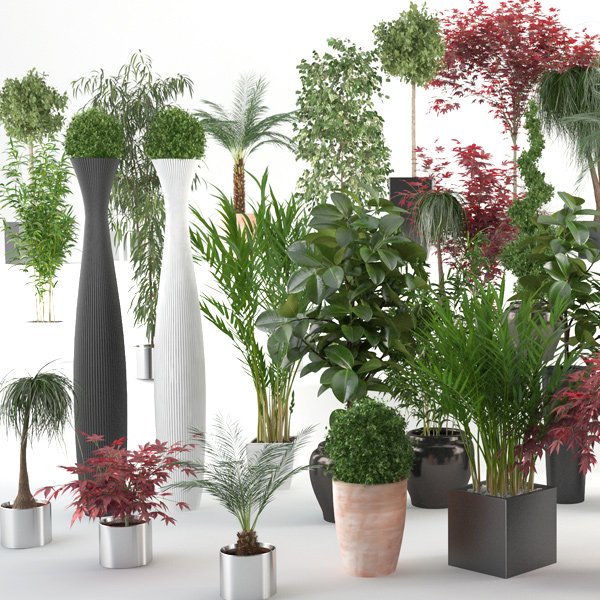
The leaves of Mimosa pudica (touch- me – not plant) closes on touching, and in like manner, the stalk of helianthus annuus (sunflower) follows the path of the sun from dawn to dusk, ( from east to west) and during night it moves from West to east.
The dance of Desmodium gyrans (Indian telegraph plant) leaf is mesmerizing.
movements are triggered by an external stimuli.
Unlike animals, plants may not move on their own from one location to another, but can move their body parts for getting sunlight , water and nutrients and are sensitive to external factors like light, gravity, temperature etc……..
Perhaps you have done such experiments in earlier classes and have found that plants do grow towards the sunlight.
 Success.com